As libraries' physical collections disappear into online collects, and their other services become increasingly more technological, the demand for good information architecture on library websites is growing very rapidly. Information architects developing library websites should consider users who know the exact pieces of information they're looking for; users who do not know exactly the information they're looking for and want to browse the available subject areas; and users who want everything on a subject. I am interested in academic libraries, particularly in the humanities, in which the later two types of user behavior are the most common.
Academic library websites must have a somewhat ambiguous interface to attend to the needs of users browsing for general information in a particular subject area. At the same time, it is absolutely essential that the library websites enable them to get to a specific piece of information quickly, for example, the record for an item, or the opening hours for the building. The necessary technologies for library websites include databases through which the catalog can be accessed and holdings which might be displayed using an XML language, like the Dublin Core, MARC, or the World Wide Web Consortium. As an academic library's users are for the most part faculty and students, it would need to have an accessible interface, not written into the HTML, but instead included in the form a cascading style sheet. The library at St. Olaf College, where I did my first degree is a good example of an architecturally sound academic library website. Just from the homepage, it allows the user to browse using links, subject searches, and key word searches, as well as search for specific items using title, author, or ISBN searches.

About Me
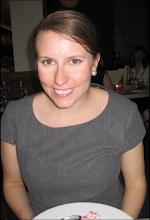
- Catie
- Hello! Thanks for visiting my blog! My name is Catie, and I am currently working at City University as a Service Assistant and at Cass Business School as a Evening/Saturday Deputy Supervisor. I've just finished for the summer at City, but I'm still working at Cass until the middle of July. After that it's back home to New York for me.
No comments:
Post a Comment